
 Delta Sleep Peptide Research
 Deep Restorative Sleep
 Rhythm Support
 Stress Response Regulation
 Currently in Development
Restore the deep sleep your body was built to produce.
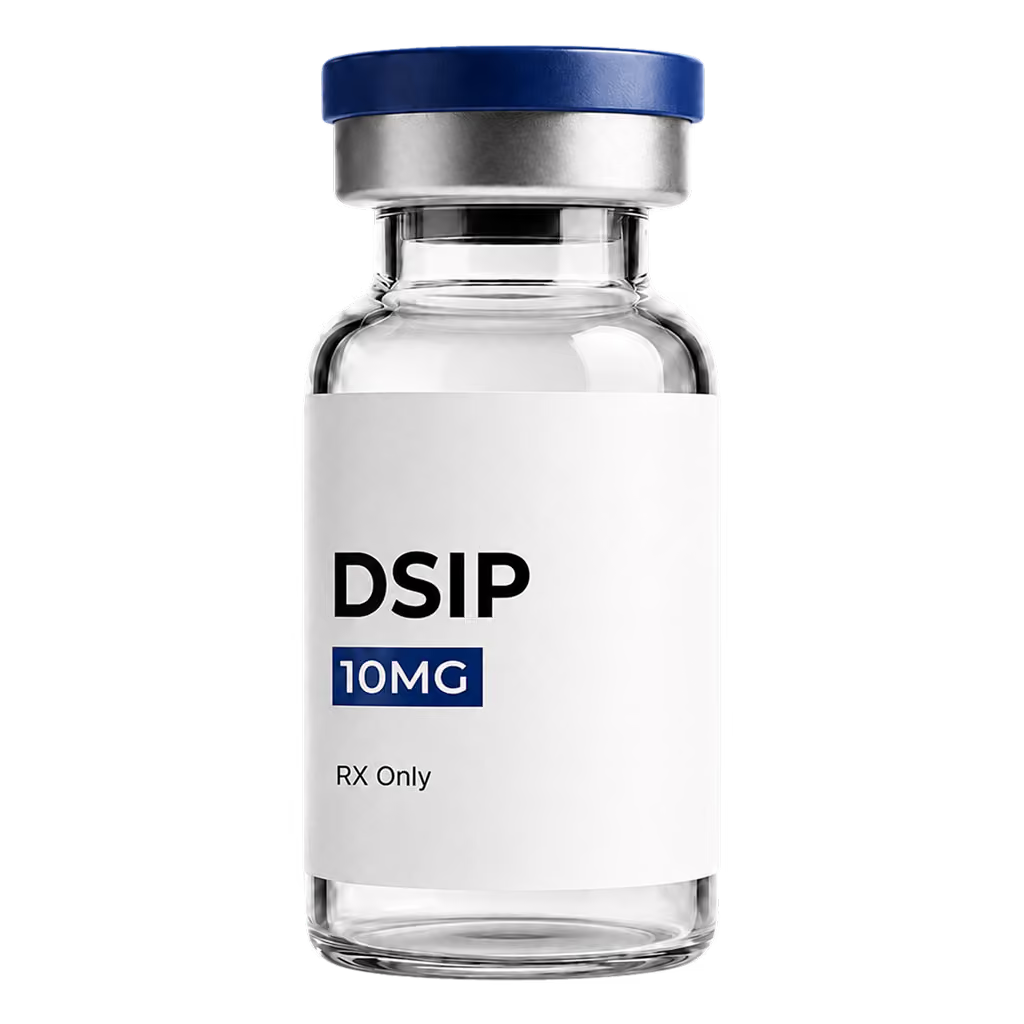
DSIP is a naturally occurring nonapeptide studied for its role in promoting slow wave delta sleep, regulating circadian rhythm, and modulating the stress response. It is not FDA approved and is not currently available through this site. We are building toward a physician supervised access model. Join the waitlist to be notified when we launch.
DSIP therapy is coming to the US.
50+ Sold Today
DSIP therapy is coming to the US.
We are working to make physician supervised DSIP therapy available in the United States. DSIP is not FDA approved and is not currently available through this site. Join the waitlist and we will notify you the moment it is.

Currently in Development
No Hidden Fees
Coming Soon
What DSIP actually is, and why research history does not mean FDA approval.
A Neuropeptide, Not a Sedative
Studied for Decades Is Not the Same as FDA Approved
That is not equivalent to FDA approval. Most DSIP studies used small sample sizes, varied methodologies, and were published in the 1980s and 1990s before modern randomized controlled trial standards became the norm. No DSIP product has been submitted for FDA review. No Phase 2 or Phase 3 trial conforming to current ICH guidelines has been conducted. In the United States, DSIP is not approved for any indication, and no classification currently permits US compounding through the standard 503A pathway. This site does not facilitate any prescriptions or purchases at this time.
The Neurobiology of Deep Sleep Restoration
Research Area 1 · Discovery and Early Clinical Studies · Schoenenberger, Monnier, and Successors
DSIP (Delta Sleep Inducing Peptide) was first isolated in 1977 by Schoenenberger and Monnier from the cerebral venous blood of rabbits during electrically induced sleep. The nonapeptide sequence (Trp-Ala-Gly-Gly-Asp-Ala-Ser-Gly-Glu) was identified as a factor that promoted slow wave delta sleep when administered to recipient animals. Subsequent human studies in the 1980s and 1990s demonstrated that DSIP administration could increase delta wave sleep duration, reduce sleep onset latency, and improve subjective sleep quality in patients with insomnia, without suppressing REM sleep or producing next day sedation. While these early clinical studies used small sample sizes and varied methodologies, they established the foundational evidence that DSIP influences sleep architecture through endogenous regulatory mechanisms rather than sedative suppression.Research Area 2 · Mechanism of Action · Neuroendocrine and Stress Modulation
DSIP does not function as a sedative. It acts as a neuromodulator that influences multiple regulatory pathways involved in sleep onset and maintenance. Published research has demonstrated effects on cortisol regulation, with DSIP reducing elevated cortisol levels associated with chronic stress and hyperarousal. Studies have also shown DSIP modulates serotonin turnover, luteinizing hormone release, and somatotropin (growth hormone) secretion, connecting deep sleep to the broader neuroendocrine network that governs physical recovery, immune function, and hormonal health. The peptide appears to work by facilitating the brain's transition into slow wave sleep states rather than forcing unconsciousness, which distinguishes it mechanistically from every class of conventional sleep medication currently prescribed.Research Area 3 · Pain, Withdrawal, and Oxidative Stress · Extended Applications
Beyond sleep, DSIP has been studied for analgesic properties in chronic pain conditions, where it appears to modulate pain perception without opioid receptor binding. Published research in the 1990s examined DSIP as an adjunct in opioid and alcohol withdrawal protocols, where disrupted sleep is both a symptom and a significant driver of relapse. Preliminary evidence suggested reduced withdrawal related insomnia and improved sleep continuity without addictive potential. Additionally, in vitro and animal studies have demonstrated antioxidant properties, with DSIP reducing markers of oxidative stress in neuronal tissue, suggesting a neuroprotective role that extends beyond immediate sleep effects.
Source References
- 1. Schneider-Helmert D, Schoenenberger GA. Effects of DSIP in Man: Multifunctional Psychophysiological Properties. Neuropsychobiology. 1983;9(4):197 to 206.
- 1. Graf MV, Kastin AJ. Delta Sleep Inducing Peptide (DSIP): A Review. Neuroscience and Biobehavioral Reviews. 1984;8(1):83 to 93.
- 3. Prudchenko IA, Starostina MV, Mikhaleva II, et al. Antioxidant properties of amidated and non-amidated forms of DSIP. Bulletin of Experimental Biology and Medicine. 2010;150(2):185 to 188.

Next-generation sleep science
It is not sedation. It is restoration of the deep sleep your brain was already built to produce. We are working to make this available in the US.
Join WaitlistNext-generation sleep science
It is not sedation. It is restoration of the deep sleep your brain was already built to produce. We are working to make this available in the US.
Join WaitlistIs DSIP Right for You?
Disclaimer: DSIP is not FDA approved and is not currently available through this site. A licensed physician will evaluate your eligibility when prescribing becomes available. This is not a diagnostic tool.
Research observations
Weeks 1–2
Initial adaptation phase, with early improvements in sleep onset latency noted in some subjects*
Weeks 2–4
Increased delta-wave sleep duration, improved sleep continuity, and reduced nighttime waking noted in some subjects*
Months 2–3
Sustained improvements in subjective sleep quality and normalized cortisol patterns observed in monitored cohorts*
3+ Months
Ongoing assessment of response and protocol adjustment based on clinical evaluation*
Based on published clinical and preclinical research. DSIP is not FDA approved and is not currently available in the United States. These observations are from research settings and are not a guarantee of results. These statements have not been evaluated by the FDA. This product is not intended to diagnose, treat, cure, or prevent any disease.
DSIP Therapy
Pricing will be announced at launch.
 No hidden fees
 Personalized plans
 On-demand medical support
 Free expedited shipping

We help people discover and then become the ideal version of themselves.
We believe the most fundamental pillar of health, deep restorative sleep, should not depend on sedatives that suppress your brain into unconsciousness. DSIP has nearly 50 years of published research exploring a fundamentally different approach: working with the brain's own sleep architecture rather than overriding it. We are building toward making physician supervised access to this approach available in the United States.

What physician supervised DSIP therapy will look like.
- Get Notified
Thorough physician review
When we launch, you will work directly with a licensed physician experienced in peptide and sleep protocols. DSIP is a neuropeptide with a research history spanning nearly five decades and meaningful individual variability in response. Your assessment will be thorough, not a checkbox exercise.
- Get Notified
No charge until approved
You will not be charged unless your physician determines DSIP is appropriate for your situation. If approved, your protocol and pricing will be transparent with no hidden fees.
- Get Notified
Licensed physicians with sleep science experience
Care will be provided by licensed physicians with clinical experience in sleep medicine, neuroendocrine regulation, and peptide therapy. Protocols will be built around your individual history, goals, and physician evaluation, not a generic template.
- Get Notified
Guided administration
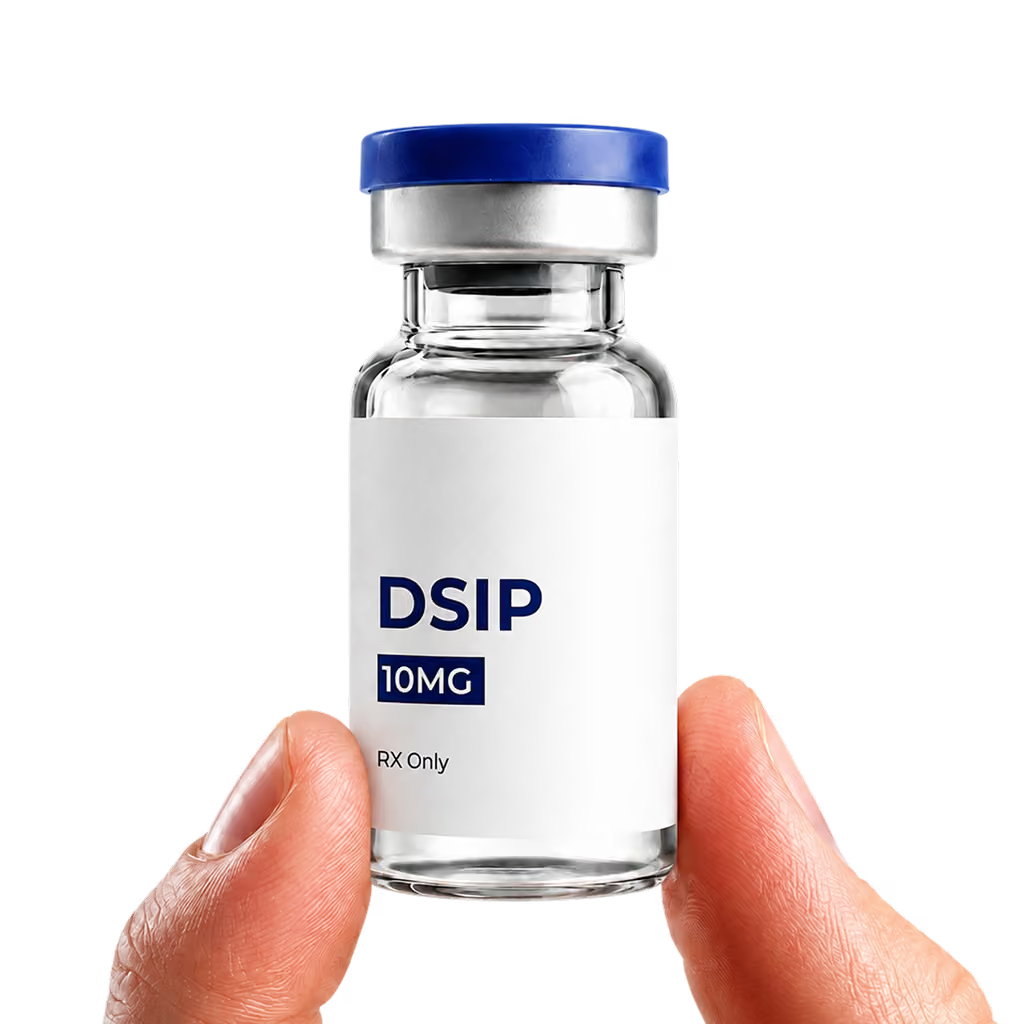
DSIP is administered by subcutaneous injection, typically in a course based protocol. Your care team will guide you through the administration process and provide monitoring throughout your treatment course.
Frequently Asked Questions
What is DSIP?
DSIP (Delta Sleep Inducing Peptide) is a naturally occurring nonapeptide first isolated from brain tissue in 1977. Its amino acid sequence is Trp-Ala-Gly-Gly-Asp-Ala-Ser-Gly-Glu. It has been studied for its role in promoting slow wave delta sleep, regulating circadian rhythm, modulating the stress response, and supporting neuroendocrine function. It is administered as a subcutaneous injection.
Is DSIP FDA approved?
No. DSIP is not FDA approved for any indication. It has been studied in published clinical and preclinical research since the late 1970s. It is not currently available as a prescription therapy through this site.
Is DSIP currently available in the United States?
Not through this site. We are developing a physician supervised access model and will notify waitlist members when we launch.
How is DSIP different from sleeping pills?
Conventional sleep medications (benzodiazepines, Z drugs, antihistamines) work by suppressing brain activity to induce unconsciousness. They generally do not promote restorative deep sleep and carry risks of dependency, cognitive impairment, and next day drowsiness. DSIP works with the brain's natural sleep regulatory mechanisms, promoting the transition into slow wave delta sleep without sedation or suppression of other sleep stages.
Can DSIP help with stress related sleep problems?
Published research suggests DSIP modulates the hypothalamic pituitary adrenal axis and can normalize elevated cortisol levels associated with chronic stress. For people whose insomnia is driven by hyperarousal and stress, this mechanism is particularly relevant. However, clinical evidence is limited and DSIP is not approved for this or any other use.
Does DSIP cause next day drowsiness?
Published studies have not reported next day drowsiness or cognitive impairment with DSIP administration. Unlike sedative hypnotics, DSIP appears to support natural sleep transitions without forcing unconsciousness, meaning daytime alertness is preserved. Individual responses may vary.
What are the side effects of DSIP?
Published research has reported a favorable safety profile for DSIP at therapeutic doses, with no significant adverse effects, no dependency, and no tolerance documented. However, the clinical evidence base is limited to small studies, and comprehensive safety data from large scale controlled trials does not exist. All peptide therapies should be used under physician supervision.